---
title: Top Wheelchair Accessible Restaurants in Ballito
description: Discovering welcoming dining spots where mobility never limits connection, dignity, or the simple joy of sharing a meal on the North Coast.
image: https://www.kincare.co.za/hubfs/raw_assets/public/kincare-theme/images/hero-caregiver.jpg
---
[Skip to main content](https://www.kincare.co.za/blog/top-wheelchair-accessible-restaurants-in-ballito#main)
Serving Ballito, Umhlanga, Salt Rock & the Dolphin Coast [Call: 082 453 1272](tel:+27824531272) [WhatsApp Us](https://wa.me/27824531272)
[](https://www.kincare.co.za/)
[About](https://www.kincare.co.za/about)
Services
Care Services
[Skilled Nursing Care](https://www.kincare.co.za/skilled-nursing-care-at-home-compassionate-elder-support-kincare) [Dementia & Alzheimer's Care](https://www.kincare.co.za/dementia-care-at-home-specialised-support-in-ballito-kincare) [Companion & Personal Care](https://www.kincare.co.za/companion-personal-care-services-kincare) [Respite Care](https://www.kincare.co.za/respite-care-services-support-for-caregivers-kincare) [Palliative & End-of-Life Care](https://www.kincare.co.za/palliative-care-at-home-compassionate-support-for-families-kincare) [Post-Hospital Recovery](https://www.kincare.co.za/post-hospital-recovery-care-compassionate-support-at-home-kincare)
Service Areas
[Ballito](https://www.kincare.co.za/in-home-elder-care-services-compassionate-support-in-ballito-kincare) [Umhlanga](https://www.kincare.co.za/in-home-elder-care-skilled-nursing-support-in-umhlanga-kincare) [Salt Rock](https://www.kincare.co.za/in-home-elder-care-skilled-nursing-support-in-salt-rock-kincare) [Zimbali](https://www.kincare.co.za/in-home-elder-care-services-skilled-nursing-support-in-zimbali-kincare) [View all services →](https://www.kincare.co.za/services)
Not sure which care fits?
Book a free, no-obligation assessment and we'll help you find the right support for your loved one.
[Book a Free Assessment](https://www.kincare.co.za/contact)
[Resources](https://www.kincare.co.za/blog) [Contact](https://www.kincare.co.za/contact)
[Free Consultation](https://www.kincare.co.za/contact)
# Top Wheelchair Accessible Restaurants in Ballito
By Sharon · 28 Jul 2026
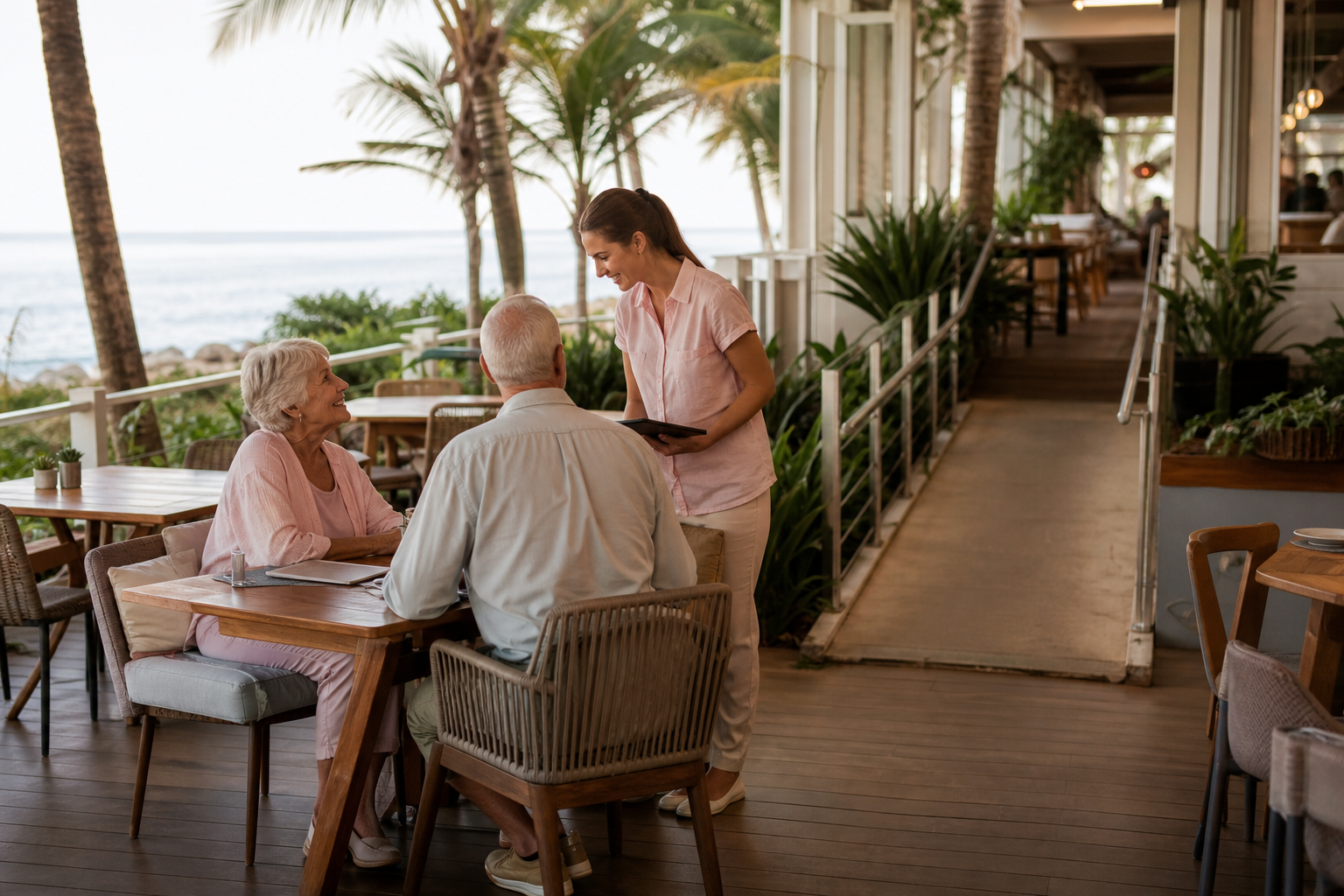
Discovering welcoming dining spots where mobility never limits connection, dignity, or the simple joy of sharing a meal on the North Coast.
## Why Accessibility Matters Beyond Ramps and Parking
Dining out represents one of life's simple pleasures — a chance to gather, to celebrate, to simply be present with the people who matter most. For seniors using wheelchairs and their families on the KZN North Coast, that experience begins long before the first course arrives. It starts the moment you consider whether the venue will welcome you with dignity, whether your loved one will navigate the space with confidence, whether the evening will centre on connection rather than obstacles.
True accessibility extends far beyond the minimum requirements. A ramp at the entrance matters, certainly. Designated parking spaces matter. But so does the width of doorways, the turning radius inside the dining room, the height of tables that allow wheelchairs to slide beneath comfortably. So does the layout of restrooms — not just the presence of grab rails, but their placement, the door swing, the space to manoeuvre with assistance if needed.
When a restaurant commits to genuine accessibility, it signals something deeper than compliance. It demonstrates respect for the autonomy and presence of every guest. For the senior who has spent a lifetime making their own choices, accessible dining means continuing to participate fully in family gatherings, birthdays, and ordinary Tuesdays that deserve celebration. For the adult child arranging the outing, it means one less barrier, one more opportunity to focus on what matters — the shared meal, the conversation, the warmth of being together.
Ballito's coastal setting offers natural beauty that deserves to be enjoyed by everyone, regardless of mobility. The question isn't whether seniors in wheelchairs can dine out on the North Coast. The question is whether our local venues will rise to meet them with the thoughtfulness and care they've earned.
## What Makes a Restaurant Truly Accessible for Wheelchair Users
Accessible dining begins with the approach. Can you park close to the entrance without navigating steep slopes or uneven paving? Is the path from car to door smooth, wide, and free from sudden steps or narrow gates? These details determine whether an outing feels welcoming or becomes a test of endurance before you've even arrived.
Once inside, spatial flow matters profoundly. Tables placed too closely together create anxiety and awkwardness, forcing diners to ask others to move or staff to rearrange furniture. Proper accessibility means adequate circulation space — at least 1.2 metres between tables and along main pathways. It means tables at a height that allows wheelchairs to pull up naturally, without the person feeling relegated to an afterthought position at the end of the table.
Restroom access often reveals a venue's true commitment. A single accessible toilet tucked away at the far end of the building, reachable only through the kitchen or down a service corridor, doesn't meet the standard. Dignity requires proximity, privacy, and thoughtful design: grab rails positioned where they're actually useful, adequate space for a companion to assist if needed, doors that open outward or slide rather than swing inward into cramped quarters.
Consider also the less obvious elements. Can your loved one see the menu without craning past table arrangements? Is the lighting adequate without being harsh? Are staff trained to address the person in the wheelchair directly, rather than speaking over them to companions? These moments of interaction shape whether dining out feels like full participation or conditional inclusion.
The restaurants that get accessibility right don't treat it as an inconvenience or an add-on. They build it into their identity from the beginning, understanding that everyone — regardless of age or mobility — deserves to enjoy the North Coast's hospitality without compromise.
## Ballito Dining Spots That Welcome Everyone with Dignity
While comprehensive accessibility information isn't always published prominently, several Ballito establishments have earned quiet reputations among local families for thoughtful design and genuine welcome. These venues understand that accessibility isn't a checklist but an ongoing commitment to dignity and inclusion.
Al Pescatore at Ballito's Lifestyle Centre offers level entry from the parking area and spacious interior pathways. The restaurant's generous table spacing allows wheelchair users to navigate comfortably, and the management has shown willingness to accommodate seating requests that prioritize ease of access. The coastal views remain accessible to everyone, regardless of mobility.
Mozambik Ballito provides another example of thoughtful spatial planning. The venue features wide entrances, accessible restrooms with proper clearances, and staff who consistently demonstrate awareness and courtesy. Families report feeling genuinely welcomed rather than accommodated as an exception.
The Galley Beach Bar & Grill, situated with ocean views, has worked to ensure that wheelchair users can enjoy the same beachfront atmosphere as all guests. While beach venues naturally present terrain challenges, management has made efforts to create accessible pathways and seating areas that don't isolate guests with mobility aids.
Before visiting any venue, it remains wise to phone ahead. Ask specific questions: Are there steps at any point between parking and seating? What is the restroom configuration? Can tables be arranged to allow comfortable wheelchair access? The quality of these conversations often predicts the quality of the experience. Restaurants committed to accessibility will answer with clarity and welcome the chance to prepare.
The North Coast dining scene continues to evolve. As more venues recognize that accessibility benefits everyone — seniors, families with young children, guests recovering from injuries — the standard rises. Your choice to support restaurants that champion inclusion encourages others to follow.
## Planning Your Outing for Comfort and Confidence
Thoughtful preparation transforms a potentially stressful outing into a genuinely enjoyable experience. Start by calling the restaurant during a quiet period, when staff have time for a detailed conversation. Describe your specific needs: wheelchair dimensions if the chair is particularly wide, whether you'll need assistance with transfers, any medical considerations that might affect timing or seating.
Choose your timing strategically. Midweek lunches and early dinner services tend to be quieter, offering more space, less noise, and staff with greater capacity to attend to individual needs. This approach benefits your loved one's comfort and reduces the ambient stress that can make dining out feel overwhelming for seniors managing fatigue or sensory sensitivities.
Consider the journey as part of the experience. Allow extra time for parking, for navigating entrances, for settling in without rush. Build in bathroom visits before ordering, so your loved one isn't managing urgent needs while waiting for food. These small buffers prevent the outing from becoming a source of anxiety rather than pleasure.
If your family member lives with dementia or conditions that affect communication, brief the restaurant staff discreetly upon arrival. A simple explanation — 'My mother may need a few extra moments to decide' or 'My father prefers not to be startled by approach from behind' — allows staff to adapt their service style with understanding rather than confusion.
Pack essentials that support comfort: a cushion if prolonged sitting causes discomfort, medications that may be needed during the meal, a light wrap if air conditioning tends to be aggressive. These preparations signal to your loved one that their wellbeing has been considered, that this outing has been planned with their dignity and comfort at the centre.
After the meal, take your time. There's no need to rush through payment and departure. Allow your loved one to savour the final moments of the experience — the atmosphere, the sense of being out in the world, the satisfaction of a meal shared well. These closings matter as much as the welcome.
## Supporting Venues That Champion Inclusion on the North Coast
When you discover a restaurant that honours accessibility with genuine commitment, tell people. Share your experience with other families navigating similar decisions. Leave thoughtful reviews that mention specific accessibility features: 'The level entrance and spacious restroom made dining here a true pleasure for my mother, who uses a wheelchair.' These details help others plan with confidence and signal to the venue that their efforts are noticed and valued.
Direct feedback to management matters even more than public reviews. When a restaurant gets accessibility right, let them know. A brief conversation with the manager or a note expressing appreciation reinforces that inclusive design isn't just compliance — it's good hospitality that builds loyalty and community reputation.
Equally, when you encounter barriers, share that feedback constructively. Many venues want to improve but lack awareness of specific obstacles. A calm conversation explaining what would make the space more welcoming often leads to meaningful change, particularly at smaller establishments where ownership is hands-on and responsive to community input.
Your choices shape the market. Restaurants pay attention to patronage patterns. When accessible venues thrive, other establishments take note. By directing your family's dining budget toward venues that champion inclusion, you participate in building a more dignified North Coast for all seniors, regardless of mobility status.
Consider also connecting with local seniors' organizations and advocacy groups focused on accessibility. Collective voices carry greater weight when approaching venues or municipal planning bodies about infrastructure improvements — smoother pavements, better signage, thoughtful public space design — that benefit the entire community.
The vision is simple: a North Coast where every senior can choose where to dine based on cuisine preference and atmosphere, not on which venues happen to be navigable. We're not there yet, but every family that insists on dignity and inclusion moves us closer. Your loved one deserves to be cherished, not just accommodated. The restaurants that understand this distinction deserve our support and our loyalty.
[← Back to all resources](https://www.kincare.co.za/blog)
Ready when you are
## Ready to discuss your loved one's care?
Book a free, no-obligation care assessment. We'll visit your home, understand your needs, and create a personalised care plan.
[Book a Free Assessment](https://www.kincare.co.za/contact) [Chat on WhatsApp](https://wa.me/27824531272)

Compassionate in-home elder care in Ballito and the KZN North Coast. Helping your loved ones live with dignity, comfort and independence — at home.
##### Quick Links
- [About](https://www.kincare.co.za/about)
- [Services](https://www.kincare.co.za/services)
- [Resources](https://www.kincare.co.za/blog)
- [Contact](https://www.kincare.co.za/contact)
##### Our Services
- [Skilled Nursing](https://www.kincare.co.za/skilled-nursing-care-at-home-compassionate-elder-support-kincare)
- [Dementia Care](https://www.kincare.co.za/dementia-care-at-home-specialised-support-in-ballito-kincare)
- [Companion Care](https://www.kincare.co.za/companion-personal-care-services-kincare)
- [Respite Care](https://www.kincare.co.za/respite-care-services-support-for-caregivers-kincare)
- [Palliative Care](https://www.kincare.co.za/palliative-care-at-home-compassionate-support-for-families-kincare)
##### Get in Touch
- [082 453 1272](tel:+27824531272)
- [sharon@kincare.co.za](mailto:sharon@kincare.co.za)
- [WhatsApp Us](https://wa.me/27824531272)
- [Facebook](https://www.facebook.com/people/KinCare/61579284402781/)
- Ballito, KwaZulu-Natal, South Africa
© 2026 KinCare Senior Support. All rights reserved. Proudly South African 🇿🇦
```json
{
"@context" : "https://schema.org",
"@id" : "https://www.kincare.co.za/#organization",
"@type" : "Organization",
"email" : "sharon@kincare.co.za",
"image" : "//146011099.fs1.hubspotusercontent-eu1.net/hubfs/146011099/raw_assets/public/kincare-theme/images/hero-caregiver.jpg",
"logo" : "//146011099.fs1.hubspotusercontent-eu1.net/hubfs/146011099/raw_assets/public/kincare-theme/images/logo-full.png",
"name" : "KinCare Senior Support",
"sameAs" : [ "https://www.facebook.com/people/KinCare/61579284402781/", "https://wa.me/27824531272" ],
"telephone" : "+27824531272",
"url" : "https://www.kincare.co.za/"
}
```
```json
{
"@context" : "https://schema.org",
"@id" : "https://www.kincare.co.za/#website",
"@type" : "WebSite",
"inLanguage" : "en-ZA",
"name" : "KinCare Senior Support",
"publisher" : {
"@id" : "https://www.kincare.co.za/#organization"
},
"url" : "https://www.kincare.co.za/"
}
```
```json
{
"@context" : "https://schema.org",
"@id" : "https://www.kincare.co.za/#localbusiness",
"@type" : "LocalBusiness",
"address" : {
"@type" : "PostalAddress",
"addressCountry" : "ZA",
"addressLocality" : "Ballito",
"addressRegion" : "KwaZulu-Natal"
},
"areaServed" : [ "Ballito", "Umhlanga", "Salt Rock", "Zimbali", "Sheffield Beach", "Dolphin Coast", "Tongaat", "Shakaskraal", "La Mercy", "Westbrook" ],
"currenciesAccepted" : "ZAR",
"description" : "Compassionate, professional in-home elder care across Ballito and the KZN North Coast — skilled nursing, dementia care, companion care, respite, palliative and post-hospital support.",
"email" : "sharon@kincare.co.za",
"geo" : {
"@type" : "GeoCoordinates",
"latitude" : -29.5387,
"longitude" : 31.2144
},
"image" : "//146011099.fs1.hubspotusercontent-eu1.net/hubfs/146011099/raw_assets/public/kincare-theme/images/hero-caregiver.jpg",
"logo" : "//146011099.fs1.hubspotusercontent-eu1.net/hubfs/146011099/raw_assets/public/kincare-theme/images/logo-full.png",
"name" : "KinCare Senior Support",
"openingHoursSpecification" : [ {
"@type" : "OpeningHoursSpecification",
"closes" : "18:00",
"dayOfWeek" : [ "Monday", "Tuesday", "Wednesday", "Thursday", "Friday", "Saturday", "Sunday" ],
"opens" : "07:00"
} ],
"priceRange" : "$$",
"sameAs" : [ "https://www.facebook.com/people/KinCare/61579284402781/", "https://wa.me/27824531272" ],
"telephone" : "+27824531272",
"url" : "https://www.kincare.co.za/"
}
```
```json
{
"@context" : "https://schema.org",
"@type" : "BlogPosting",
"author" : {
"@type" : "Person",
"name" : "Sharon"
},
"datePublished" : "2026-07-28",
"headline" : "<span id="hs_cos_wrapper_name" class="hs_cos_wrapper hs_cos_wrapper_meta_field hs_cos_wrapper_type_text" style="" data-hs-cos-general-type="meta_field" data-hs-cos-type="text" >Top Wheelchair Accessible Restaurants in Ballito</span>",
"image" : "https://146011099.fs1.hubspotusercontent-eu1.net/hubfs/146011099/AI-Generated%20Media/Images/Coastal%20Restaurant%20with%20Accessible%20Seating%20and%20Ocean%20View.png",
"mainEntityOfPage" : "https://www.kincare.co.za/blog/top-wheelchair-accessible-restaurants-in-ballito",
"publisher" : {
"@type" : "Organization",
"logo" : {
"@type" : "ImageObject",
"url" : "//146011099.fs1.hubspotusercontent-eu1.net/hubfs/146011099/raw_assets/public/kincare-theme/images/logo-full.png"
},
"name" : "KinCare Senior Support"
}
}
```
```json
{
"@context" : "https://schema.org",
"@type" : "BlogPosting",
"author" : {
"@type" : "Person",
"name" : "Sharon",
"url" : "https://www.kincare.co.za/blog/author/sharon"
},
"dateModified" : "2026-07-28T08:57:07.591Z",
"datePublished" : "2026-07-28T08:57:07.000Z",
"headline" : "Top Wheelchair Accessible Restaurants in Ballito",
"image" : [ "https://www.kincare.co.za/hubfs/AI-Generated%20Media/Images/Coastal%20Restaurant%20with%20Accessible%20Seating%20and%20Ocean%20View.png" ],
"mainEntityOfPage" : {
"@id" : "https://www.kincare.co.za/blog/top-wheelchair-accessible-restaurants-in-ballito",
"@type" : "WebPage"
},
"publisher" : {
"@type" : "Organization",
"logo" : {
"@type" : "ImageObject",
"url" : "https://www.kincare.co.za/hubfs/image%201.svg"
},
"name" : "KinCare"
}
}
```