---
title: Supporting Safe and Effective Post-Hospital Recovery for Seniors
description: Hospital discharge is just the beginning — the real recovery happens at home, where dignity, familiar surroundings, and personalised support make all the difference in healing and preventing readmission.
image: https://www.kincare.co.za/hubfs/raw_assets/public/kincare-theme/images/hero-caregiver.jpg
---
[Skip to main content](https://www.kincare.co.za/blog/a-definitive-guide-to-in-home-elder-care-supporting-safer-aging-in-place-after-hospital-stays#main)
Serving Ballito, Umhlanga, Salt Rock & the Dolphin Coast [Call: 082 453 1272](tel:+27824531272) [WhatsApp Us](https://wa.me/27824531272)
[](https://www.kincare.co.za/)
[About](https://www.kincare.co.za/about)
Services
Care Services
[Skilled Nursing Care](https://www.kincare.co.za/skilled-nursing-care-at-home-compassionate-elder-support-kincare) [Dementia & Alzheimer's Care](https://www.kincare.co.za/dementia-care-at-home-specialised-support-in-ballito-kincare) [Companion & Personal Care](https://www.kincare.co.za/companion-personal-care-services-kincare) [Respite Care](https://www.kincare.co.za/respite-care-services-support-for-caregivers-kincare) [Palliative & End-of-Life Care](https://www.kincare.co.za/palliative-care-at-home-compassionate-support-for-families-kincare) [Post-Hospital Recovery](https://www.kincare.co.za/post-hospital-recovery-care-compassionate-support-at-home-kincare)
Service Areas
[Ballito](https://www.kincare.co.za/in-home-elder-care-services-compassionate-support-in-ballito-kincare) [Umhlanga](https://www.kincare.co.za/in-home-elder-care-skilled-nursing-support-in-umhlanga-kincare) [Salt Rock](https://www.kincare.co.za/in-home-elder-care-skilled-nursing-support-in-salt-rock-kincare) [Zimbali](https://www.kincare.co.za/in-home-elder-care-services-skilled-nursing-support-in-zimbali-kincare) [View all services →](https://www.kincare.co.za/services)
Not sure which care fits?
Book a free, no-obligation assessment and we'll help you find the right support for your loved one.
[Book a Free Assessment](https://www.kincare.co.za/contact)
[Resources](https://www.kincare.co.za/blog) [Contact](https://www.kincare.co.za/contact)
[Free Consultation](https://www.kincare.co.za/contact)
# Supporting Safe and Effective Post-Hospital Recovery for Seniors
By Sharon · 30 Jul 2026
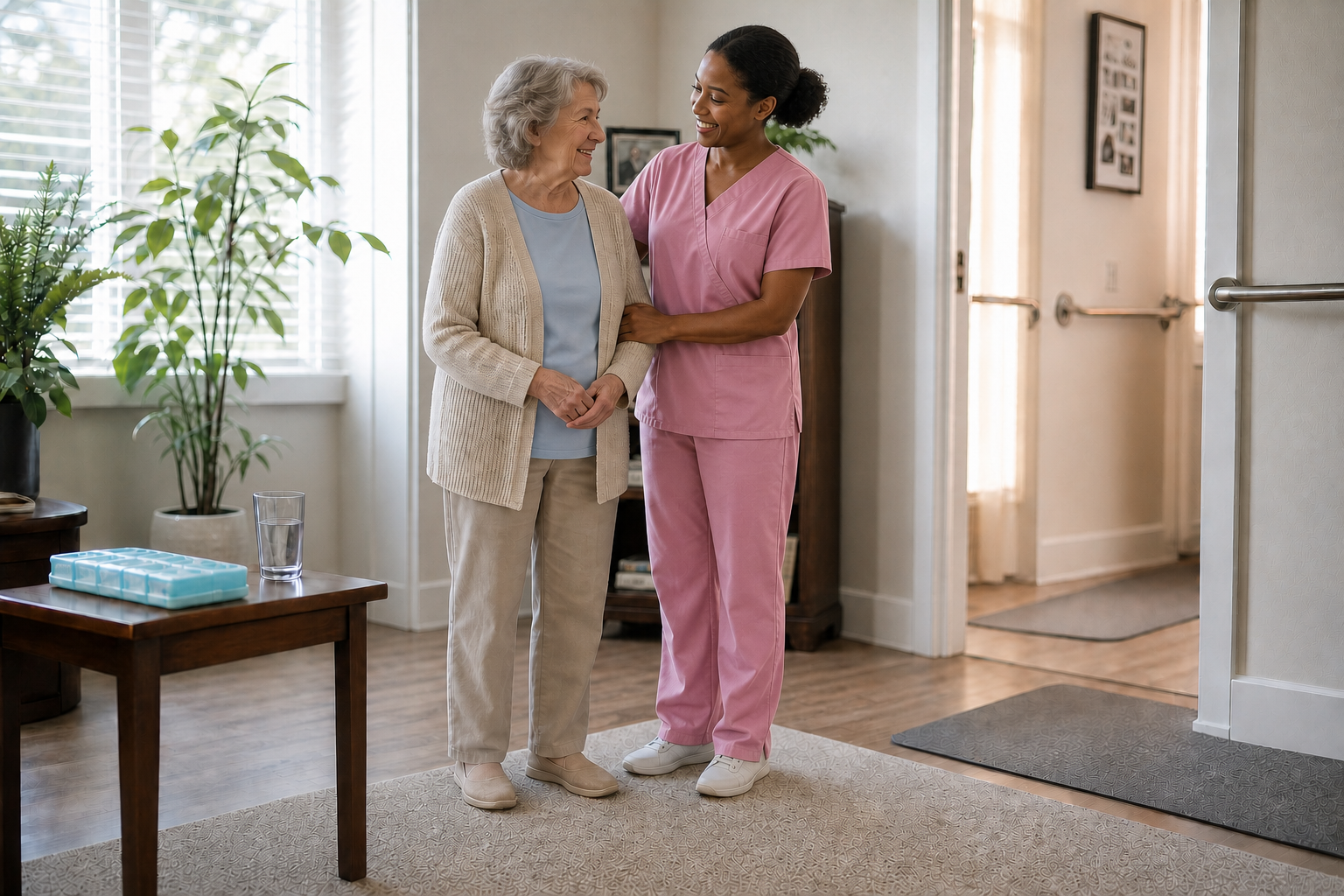
Hospital discharge is just the beginning — the real recovery happens at home, where dignity, familiar surroundings, and personalised support make all the difference in healing and preventing readmission.
## Why Hospital-to-Home Transitions Require More Than Discharge Papers
The hours after hospital discharge carry weight that discharge papers alone cannot support. Seniors leave hospital with medication lists, follow-up appointment cards, and care instructions — but they return to homes that may not yet be ready, and to families who may not yet know what recovery truly requires.
Readmission rates tell part of the story. Within 30 days of discharge, a significant proportion of older adults return to hospital — often because the transition home lacked coordinated support. The gap is not medical. It is practical, environmental, and deeply human. Recovery at home demands more than clinical expertise. It requires someone to notice when a senior is confused by new medications, when they struggle to move safely from bed to bathroom, when isolation turns a healing home into a place of quiet risk.
Hospitals stabilize. Home is where healing continues — or where progress unravels. The difference lies in whether the senior has what they need in those first critical days: help with bathing and dressing, supervision with new mobility aids, medication reminders at the right times, a safe environment free from fall hazards, someone present who understands both the care plan and the person.
Discharge papers cannot anticipate the moment when a senior feels overwhelmed by the complexity of recovery. They cannot adjust the plan when pain levels change, when appetite fades, when the bathroom feels impossibly far away in the middle of the night. What bridges that gap is human presence — someone who sees the person, not just the paperwork, and who adjusts support in real time to match what recovery actually looks like at home.
## What Post-Hospital In-Home Care Actually Involves
Post-hospital care begins with understanding what changed. A hospital stay alters routines, physical capacity, and confidence. The senior who managed independently before surgery may now need help with transfers. The person discharged after a cardiac event may tire easily, struggle with medication schedules, or feel anxious about doing too much — or too little.
A personalised care plan maps the path forward. It documents what the hospital requires — wound care, medication management, physical therapy exercises — and what the person needs to live safely and comfortably at home. That includes assistance with bathing, dressing, and toileting when mobility is limited. It includes meal preparation that aligns with new dietary restrictions, light housekeeping that removes clutter and tripping hazards, and companionship that eases the emotional weight of recovery.
The plan is not static. Recovery brings daily shifts in what a senior can manage alone and where support is needed. A carer trained in post-hospital care observes, adjusts, and communicates with family and healthcare providers when needs change. They notice when a wound shows signs of infection, when pain is poorly controlled, when a senior skips meals or becomes withdrawn. They escalate concerns before they become crises.
Coordination ties the pieces together. Hospital discharge summaries reach the GP. Follow-up appointments are scheduled and attended. Medications are collected, organized, and taken as prescribed. Physical therapy exercises are completed, not skipped. Blood pressure and glucose are monitored. The home becomes an extension of the care team — not because it is clinical, but because it is structured, attentive, and responsive to what the senior's body is telling them each day.
## Creating a Safe Home Environment That Supports Recovery
A home that felt safe before hospital may not be safe after. Vision changes, balance issues, reduced strength, and new mobility aids shift the risk profile of familiar spaces. Recovery requires an environment that supports independence without exposing the senior to preventable falls, injuries, or complications.
The assessment is practical. Pathways from bedroom to bathroom, from bed to kitchen, from sitting to standing — every transition is reviewed. Loose rugs are removed or secured. Electrical cords are rerouted. Lighting is improved, especially in hallways and staircases used at night. Grab bars are installed beside toilets and in showers. Non-slip mats replace slippery surfaces. Furniture is repositioned to create clear walking paths and stable handholds.
The bedroom becomes recovery headquarters. The bed height matters — too high or too low makes transfers harder and increases fall risk. Essential items are placed within reach: water, medications, a bell or phone to call for help, a commode if the bathroom feels too far at night. If stairs are unavoidable, a plan is made for safe navigation with support, or the main living area is temporarily moved downstairs.
Safety is not restriction. A well-adapted home allows a senior to move with confidence, to participate in their own recovery, to maintain dignity and autonomy within safe limits. It is the foundation for everything else — because without a safe environment, even the best care plan cannot prevent the falls, fractures, and complications that send recovering seniors back to hospital.
## Coordinating Medical Follow-Up and Medication Management at Home
Discharge instructions list medications with dosages, frequencies, and purposes. They specify follow-up appointments with GPs, specialists, and therapists. But lists do not manage themselves. The senior recovering at home may be on five or eight or twelve medications, some new, some adjusted, some to be stopped after a certain date. Confusion is not failure. It is the predictable consequence of complexity.
Medication management at home is precise work. Tablets are sorted by day and time into organizers that remove guesswork. Carers confirm what is taken, when, and in what dose. They observe for side effects — nausea, dizziness, confusion, changes in appetite or mood — and report concerns to the GP or pharmacist. They ensure prescriptions are collected before they run out, that medications are stored correctly, that the senior understands why each one matters.
Follow-up appointments anchor recovery. The GP monitors healing, adjusts treatment, and watches for complications. The physiotherapist guides safe movement and strength-building. The wound care nurse checks healing progress. Each appointment matters, but only if it happens. In-home support ensures the senior is ready — dressed, fed, with medications and medical records in hand — and that transport is arranged if family cannot provide it.
Communication closes the loop. Hospital discharge summaries reach the GP, but not always quickly. The in-home carer bridges that gap — sharing observations, flagging concerns, ensuring everyone involved in the senior's care has the information they need. When the plan works, recovery happens at home. When coordination breaks down, the senior lands back in hospital, starting over.
## When to Consider Professional In-Home Support for Your Loved One
Some families manage post-hospital care alone. Others try, then realize the demands exceed what they can sustain. The decision to bring in professional support is not about love or commitment. It is about matching the complexity of recovery to the skills, time, and availability required to do it safely.
Consider professional care when the senior's needs surpass family capacity. When wound care or medication management feels overwhelming. When mobility assistance requires more physical strength than family members have. When the discharge plan specifies tasks — catheter care, blood sugar monitoring, physical therapy support — that family has not been trained to perform. When the senior lives alone and cannot safely be left unsupervised during early recovery.
Consider it when family caregivers are stretched beyond sustainable limits. When they are working full-time and cannot be present during the day. When they are caring for young children, managing their own health conditions, or living too far away to provide daily hands-on help. When nights are interrupted, exhaustion builds, and the caregiver's own health begins to suffer. Respite is not optional. It is what prevents one person's recovery from breaking another person's wellbeing.
Consider it when recovery is not progressing as expected. When the senior is not eating, not moving, not engaging. When confusion increases or mood declines. When small setbacks accumulate into larger risks. A professional carer trained in post-hospital elder care recognizes these signs early, escalates appropriately, and adjusts support before the situation deteriorates.
The goal is not to take over. It is to provide the level of support that allows recovery to happen safely at home — where the senior is most comfortable, where healing is supported by familiar surroundings and the dignity of their own space. Professional in-home care is what makes aging in place possible, even after hospital, even when recovery is complicated, even when family alone cannot carry the weight.
[← Back to all resources](https://www.kincare.co.za/blog)
Ready when you are
## Ready to discuss your loved one's care?
Book a free, no-obligation care assessment. We'll visit your home, understand your needs, and create a personalised care plan.
[Book a Free Assessment](https://www.kincare.co.za/contact) [Chat on WhatsApp](https://wa.me/27824531272)

Compassionate in-home elder care in Ballito and the KZN North Coast. Helping your loved ones live with dignity, comfort and independence — at home.
##### Quick Links
- [About](https://www.kincare.co.za/about)
- [Services](https://www.kincare.co.za/services)
- [Resources](https://www.kincare.co.za/blog)
- [Contact](https://www.kincare.co.za/contact)
##### Our Services
- [Skilled Nursing](https://www.kincare.co.za/skilled-nursing-care-at-home-compassionate-elder-support-kincare)
- [Dementia Care](https://www.kincare.co.za/dementia-care-at-home-specialised-support-in-ballito-kincare)
- [Companion Care](https://www.kincare.co.za/companion-personal-care-services-kincare)
- [Respite Care](https://www.kincare.co.za/respite-care-services-support-for-caregivers-kincare)
- [Palliative Care](https://www.kincare.co.za/palliative-care-at-home-compassionate-support-for-families-kincare)
##### Get in Touch
- [082 453 1272](tel:+27824531272)
- [sharon@kincare.co.za](mailto:sharon@kincare.co.za)
- [WhatsApp Us](https://wa.me/27824531272)
- [Facebook](https://www.facebook.com/people/KinCare/61579284402781/)
- Ballito, KwaZulu-Natal, South Africa
© 2026 KinCare Senior Support. All rights reserved. Proudly South African 🇿🇦
```json
{
"@context" : "https://schema.org",
"@id" : "https://www.kincare.co.za/#organization",
"@type" : "Organization",
"email" : "sharon@kincare.co.za",
"image" : "//146011099.fs1.hubspotusercontent-eu1.net/hubfs/146011099/raw_assets/public/kincare-theme/images/hero-caregiver.jpg",
"logo" : "//146011099.fs1.hubspotusercontent-eu1.net/hubfs/146011099/raw_assets/public/kincare-theme/images/logo-full.png",
"name" : "KinCare Senior Support",
"sameAs" : [ "https://www.facebook.com/people/KinCare/61579284402781/", "https://wa.me/27824531272" ],
"telephone" : "+27824531272",
"url" : "https://www.kincare.co.za/"
}
```
```json
{
"@context" : "https://schema.org",
"@id" : "https://www.kincare.co.za/#website",
"@type" : "WebSite",
"inLanguage" : "en-ZA",
"name" : "KinCare Senior Support",
"publisher" : {
"@id" : "https://www.kincare.co.za/#organization"
},
"url" : "https://www.kincare.co.za/"
}
```
```json
{
"@context" : "https://schema.org",
"@id" : "https://www.kincare.co.za/#localbusiness",
"@type" : "LocalBusiness",
"address" : {
"@type" : "PostalAddress",
"addressCountry" : "ZA",
"addressLocality" : "Ballito",
"addressRegion" : "KwaZulu-Natal"
},
"areaServed" : [ "Ballito", "Umhlanga", "Salt Rock", "Zimbali", "Sheffield Beach", "Dolphin Coast", "Tongaat", "Shakaskraal", "La Mercy", "Westbrook" ],
"currenciesAccepted" : "ZAR",
"description" : "Compassionate, professional in-home elder care across Ballito and the KZN North Coast — skilled nursing, dementia care, companion care, respite, palliative and post-hospital support.",
"email" : "sharon@kincare.co.za",
"geo" : {
"@type" : "GeoCoordinates",
"latitude" : -29.5387,
"longitude" : 31.2144
},
"image" : "//146011099.fs1.hubspotusercontent-eu1.net/hubfs/146011099/raw_assets/public/kincare-theme/images/hero-caregiver.jpg",
"logo" : "//146011099.fs1.hubspotusercontent-eu1.net/hubfs/146011099/raw_assets/public/kincare-theme/images/logo-full.png",
"name" : "KinCare Senior Support",
"openingHoursSpecification" : [ {
"@type" : "OpeningHoursSpecification",
"closes" : "18:00",
"dayOfWeek" : [ "Monday", "Tuesday", "Wednesday", "Thursday", "Friday", "Saturday", "Sunday" ],
"opens" : "07:00"
} ],
"priceRange" : "$$",
"sameAs" : [ "https://www.facebook.com/people/KinCare/61579284402781/", "https://wa.me/27824531272" ],
"telephone" : "+27824531272",
"url" : "https://www.kincare.co.za/"
}
```
```json
{
"@context" : "https://schema.org",
"@type" : "BlogPosting",
"author" : {
"@type" : "Person",
"name" : "Sharon"
},
"datePublished" : "2026-07-30",
"headline" : "<span id="hs_cos_wrapper_name" class="hs_cos_wrapper hs_cos_wrapper_meta_field hs_cos_wrapper_type_text" style="" data-hs-cos-general-type="meta_field" data-hs-cos-type="text" >Supporting Safe and Effective Post-Hospital Recovery for Seniors</span>",
"image" : "https://146011099.fs1.hubspotusercontent-eu1.net/hubfs/146011099/AI-Generated%20Media/Images/African%20Carer%20in%20Pink%20Uniform.png",
"mainEntityOfPage" : "https://www.kincare.co.za/blog/a-definitive-guide-to-in-home-elder-care-supporting-safer-aging-in-place-after-hospital-stays",
"publisher" : {
"@type" : "Organization",
"logo" : {
"@type" : "ImageObject",
"url" : "//146011099.fs1.hubspotusercontent-eu1.net/hubfs/146011099/raw_assets/public/kincare-theme/images/logo-full.png"
},
"name" : "KinCare Senior Support"
}
}
```
```json
{
"@context" : "https://schema.org",
"@type" : "BlogPosting",
"author" : {
"@type" : "Person",
"name" : "Sharon",
"url" : "https://www.kincare.co.za/blog/author/sharon"
},
"dateModified" : "2026-07-30T07:14:59.828Z",
"datePublished" : "2026-07-30T07:14:59.000Z",
"headline" : "Supporting Safe and Effective Post-Hospital Recovery for Seniors",
"image" : [ "https://www.kincare.co.za/hubfs/AI-Generated%20Media/Images/African%20Carer%20in%20Pink%20Uniform.png" ],
"mainEntityOfPage" : {
"@id" : "https://www.kincare.co.za/blog/a-definitive-guide-to-in-home-elder-care-supporting-safer-aging-in-place-after-hospital-stays",
"@type" : "WebPage"
},
"publisher" : {
"@type" : "Organization",
"logo" : {
"@type" : "ImageObject",
"url" : "https://www.kincare.co.za/hubfs/image%201.svg"
},
"name" : "KinCare"
}
}
```